About Pot/Trap Fishing: Benefits | Concerns | Pot Design & Fishing Method
Using Neptune Triggers: Fish | Crab | Lobster | Prawn | Cuttlefish, Octopus, & Squid | Other
Neptune "Catch All" 
Traps for Sale: 
For Fish
For Prawn | Accessories | Deluxe "Ready to Fish"

SPINY LOBSTER SPECIES - Lobsters without claws are generally called spiny lobsters. There are two main types of spiny lobsters. There are cold water species and there are warm water species.

Cold water spiny lobsters are found in southern waters. The various spiny lobsters caught in southern Australia and New Zealand are examples of cold water spiny lobsters. Neptune trigger devices have proven very effective on these species. Most of the traps used down under to catch lobster are top entry traps.

Warm water spiny lobsters are found in tropical areas around the world. The Florida fishery is the biggest in the US with a catch of 5-7 million pounds per year. Fishermen have traditionally used a top entry trap that uses a plastic funnel entrance. Fishermen have been experimenting with various Neptune triggers over the past 2 seasons. Unfortunately, the past two seasons have been sub par. This has made it difficult to determine if Neptune triggers have created bigger catches. Stay tuned. Trials are ongoing.

PACIFIC OCEAN SPINY LOBSTER FISHERIES - There are fisheries for spiny lobster in the Hawaiian Island archipelago and in areas south of Hawaii. The areas south of Hawaii are widely dispersed throughout the South Pacific. While numerous South Pacific lobster fisheries have been boon and bust situations, other mid ocean areas show promise for larger vessels capable of catching and freezing their catch. Seamounts and ocean ridges exist in various areas of the South Pacific. These areas are known to support populations of spiny lobsters as well as other species. The remote nature of these areas has created problems in establishing a fishery. Prospective fishing operations should consider the use of Neptune triggers on their pots and traps to insure a successful venture.

New Zealand Spiny Lobster pot.


ATLANTIC LOBSTER SPECIES - The Atlantic lobster fishery in the NE Atlantic has traditionally been fished with a trap that is segmented into two (or more) sections, the kitchen and the parlor. The traditional parlor trap design has survived the transition from wood traps to those currently made with plastic coated wire. With trap limits in place, it is more important than ever to keep all the lobster in the trap once they enter. Video footage of the parlor pot shows lobsters escaping from the conventional parlor trap design. Fishermen are aware of this, and are always looking for ways to improve the efficiency of their gear.

Some Maine, Massachusetts, and E Canadian lobstermen have started to experiment with a "parlorless" trap design that does away with the 2, or 3, chambers in a traditional trap. Using Neptune triggers in the opposing sides of the trap, these traps have only one large chamber. The use of Neptune OverHang style triggers makes it very difficult to get back out of the trap through the entrance point. Square traps with 3, or 4, entrances are also possible. Some of the traps are just using Neptune fingers on the lower ramp while others will be attaching a piece of plastic netting to the fingers to create a good walking surface for the lobster. OverHang triggers can also be used in a traditional parlor trap. They can be used to replace the net head going into the parlor, or can be used as side entries like the round hoops presently used.

figure 1

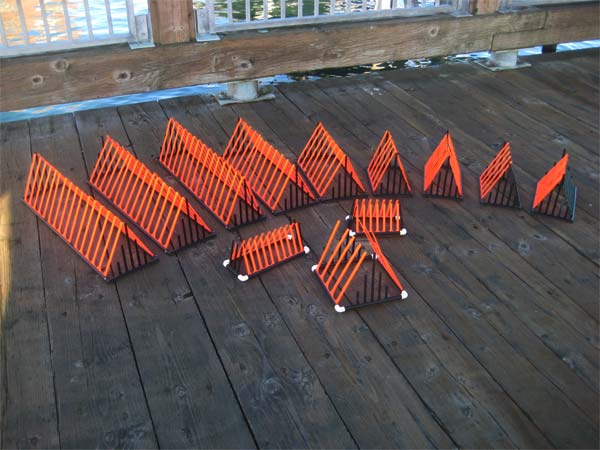
Various OverHang trigger designs are shown in figure 1. They have shorter fingers on the bottom and longer fingers on top that overhang the bottom fingers. To show the bottom fingers better, we have used orange fingers. The gap between the tips of the bottom fingers and the fingers on top is up to the fisherman to decide when he assembles the components. The sample on the right side shows the addition of plastic web to the bottom walking surface of the trigger. This should increase traction for lobsters as they walk up the ramp to enter the trap.

Neptune Marine was unsuccessful in our early 90's attempt to introduce our trigger devices to lobstermen in the North Atlantic. At that time, we had not developed our OverHang trigger style. We believe this new trigger style will provide positive results this time around. Lobstermen that are interested in experimenting with their trap to improve their catch rates should consider modifying a few of their traps with Neptune triggers. Triggers are easily self assembled and can be adapted to most traps.


Traps & Pots - Trap Entrance Devices - Galvanic Timed Releases - Bait Products
Dycem Non-Slip Products - What's New - About Us - Contact Us
Neptune Marine Products, Inc.
P.O. Box 17417
Seattle WA 98127
Phone: (206)-789-3790
Fax: (206)-783-6659
Email: Info@NeptuneMarineProducts.com
© Copyright 2000-2002 Neptune Marine Products Inc. All Rights Reserved
Web Design By www.ThorLoki.com